You're Not Tired, You're Under-Optimized: The Sleepmaxxing Arms Race Nobody Signed Up For

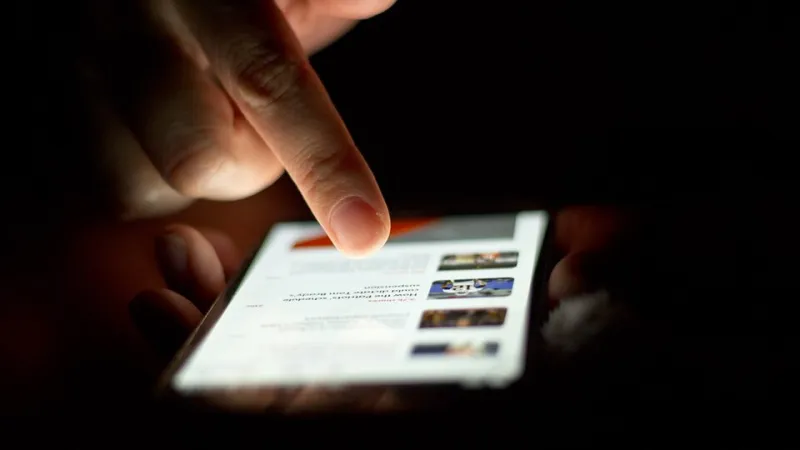
Photo: Andy Li, CC0, via Wikimedia Commons
At some point in the last two years, going to bed stopped being something you do and became something you perform. You don't just get sleepy anymore. You execute a protocol. There is a wind-down playlist, a magnesium drink that tastes like chalk with ambition, blue-light glasses, a cooling mattress pad, and a strip of tape over your mouth that you bought for $24 and still have not mentioned to your mother.
Welcome to sleepmaxxing, the corner of the internet where resting got a job title.
Bedtime Got a Performance Review
The language tells you everything. Sleep isn't sleep now. It's a stack, a routine, a score. The app grades you. Ninety-one percent sleep efficiency, whatever that means. You wake up at 7:04 a.m. feeling genuinely fine, check the dashboard, and discover you logged only 42 minutes of REM, which is apparently catastrophic, which means today is officially ruined, which means you are behind at 7:05 in the morning.
Somewhere, a hustle-culture ghost is laughing. Gen Z publicly retired the 5 a.m. club, declared the side hustle a scam, and diagnosed burnout as the previous generation's core personality. Then we took the exact same optimization brain and pointed it at the eight hours we are supposed to spend unconscious. The grind didn't die. It changed shifts.
Orthosomnia: The Diagnosis You Gave Yourself
Sleep researchers have a term for this and it's bleakly hilarious: orthosomnia, the insomnia caused by trying too hard to sleep well. You lie there at 11:47 p.m. doing math. If I fall asleep in the next nine minutes, that's six hours and twelve, minus the two times I'll wake up to pee, which is fine, that's fine, I feel fine.
You are not fine. You are monitoring. Monitoring is the opposite of rest. The tracker reports a dip in heart rate variability, so your nervous system goes on alert about the alert, a little hall of mirrors built out of biometrics.
Clinicians have been saying this for years: consumer wearables are directional, not diagnostic. Phone-based sleep staging is educated guesswork in a nice font. But guesswork feels like data, data feels like control, and control is the thing we keep buying in every other aisle of our lives. Of course we bought it for bedtime too.
The $400 Pillow Does Not Know You're Anxious
Nothing in the sleepmaxxing economy is expensive by accident. Nasal strips. Weighted blankets. Silk pillowcases. Blackout curtains that are, somehow, also an aesthetic. The seven-pound weighted eye mask. The red light. The white noise machine with 34 soundscapes, including one called rain on a tent in Iceland. Any of it. All of it. Add to cart.
And look, some of it works. Blackout curtains work. A cool room works. Consistent sleep and wake times work. None of that is glamorous enough for a haul video, which is the entire problem. The boring stuff is free and it films terribly.
The Thing We're Actually Chasing
Here's the part that reads like a joke and isn't: most people sleepmaxxing aren't chasing better sleep. They're chasing the sensation of being taken care of. There's something almost tender in the ritual. The tea. The lamp clicking down. The phone going face-down on the nightstand like a small act of self-defense. For a lot of us, that's the closest thing to being tucked in that we've had in years.
Which is why the trend has a soft underbelly. It isn't vanity, or at least not only vanity. It's an exhausted population building a tiny shrine to the one thing that refuses to be hacked, optimized, or monetized into submission. Sleep is stubborn. It does not care about your five-year plan.
Fine. What Actually Helps.
Not to be the person at the party holding a glass of water, but the boring answer is the answer. Same wake-up time every day, weekends included. Real daylight in your face in the morning, not the sad lamp you keep forgetting to plug in. Caffeine curfew around 2 p.m. Cool, dark, quiet. Bed stays for sleep, not for a 45-minute doom scroll you're calling a wind-down.
And the hardest one: stop treating a bad night like a missed deadline. One rough night is not a crisis. Refreshing the app nine times before noon is a crisis.
The Scoreboard Was the Mistake
Sleepmaxxing promised a body that runs smoother. What it shipped was another leaderboard, and there is no leaderboard Gen Z can't convert into a personal failing by Thursday afternoon. The people who seem genuinely rested in 2026 are also the people who seem genuinely fine everywhere else: not on their phones at midnight, no idea what their sleep score is, no mouth tape in the bathroom drawer.
You don't need to win bedtime. You need to be unconscious for a while. There's no content in that, which is precisely why it works.