The 'Real Me' Is a Marketing Strategy: How Gen Z Engineered Authenticity Into a Full-Time Job
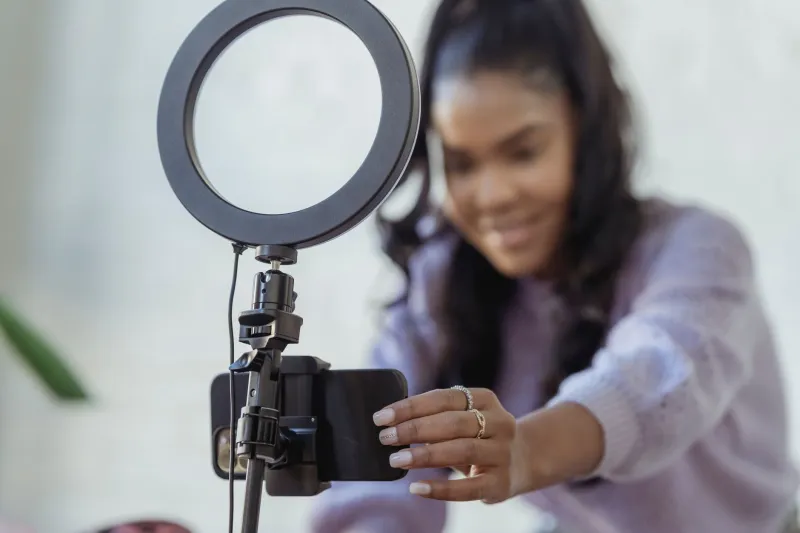
Let's get one thing straight before we go any further: that crying TikTok your favorite creator posted at 2am? The one where they were so vulnerable and so unfiltered? They checked the lighting first. Probably twice.
Welcome to the authenticity economy — where being real is the most carefully constructed product on the shelf, and Gen Z didn't just buy in, we built the whole factory.
The Vulnerability Industrial Complex
Somewhere between 2019 and now, 'being yourself online' stopped being an accident and became a full strategic operation. The shift was subtle. It started with a few creators going 'off-script' and absolutely exploding in follower count. The algorithm noticed. Then the creators noticed the algorithm noticed. And just like that, raw = reach.
The problem — or the genius, depending on how you look at it — is that once you realize vulnerability performs, you start performing vulnerability. Not because you're fake, necessarily, but because you've been conditioned to treat every personal moment as potential content. Your bad day becomes a story beat. Your anxiety becomes a relatable hook. Your messy room becomes an aesthetic.
Psychologists call this 'self-presentation theory,' and it's been around forever. But Gen Z has turbocharged it with analytics. We're not just managing impressions anymore — we're A/B testing our entire personalities to see which version of ourselves gets the most saves.
The Split-Test Self
Here's a thing that actually happens: someone posts a 'genuine' moment two different ways — once raw, once polished — and watches which one lands. Not consciously, maybe. But the feedback loop is real. Post gets 400 likes? Cool. Post gets 40,000? Oh. That version of me is apparently the one people want.
Over time, you start gravitating toward the self that performs. You start editing out the parts of you that don't get engagement. You amplify the quirks that trend. And slowly, without meaning to, you've built a character based on audience feedback rather than actual self-reflection.
This isn't a moral failure. It's just what happens when you grow up with a metrics dashboard attached to your identity. The terrifying part isn't that it's fake — it's that it starts to feel completely real, because you've lived inside it long enough.
'Authentic' Is Now Just Another Aesthetic
Scrolling through any For You Page right now, you'll spot the Authenticity Aesthetic immediately. It's the slightly shaky camera. The 'I almost didn't post this' caption energy. The confessional tone with a trending audio underneath it. The no-makeup makeup look that took 45 minutes to achieve.
None of this is inherently dishonest. But it IS a format — a learned visual language that signals realness without necessarily delivering it. Gen Z didn't invent the performance of sincerity (that's been a celebrity PR strategy since forever), but we democratized it. Now every person with a phone is running their own authenticity brand, complete with a carefully curated origin story and a signature 'flaw' that makes them more likable.
The creators who break through? They've usually mastered the format so completely that you can't tell where the strategy ends and the person begins. Which, if you think about it, is kind of the goal.
So What Even Is Real Anymore
Here's where it gets genuinely complicated: does it matter?
If you post about your anxiety because it connects with people who feel the same way — even if you timed it for peak engagement hours — is that fake? If you curate a version of yourself that's slightly braver and more interesting than your offline self, and then slowly grow into that version... is that performance or just aspiration in public?
Some researchers argue that performing a self can actually create that self. That acting confident eventually produces confidence. That narrating your growth publicly can accelerate actual growth. The psychology term is 'behavioral confirmation' — basically, you become what you repeatedly perform.
Which means Gen Z might accidentally be onto something. Not because the performance is authentic, but because the performance can become authentic over time. The A/B test on your personality might actually be a legitimate form of self-discovery — just one that happens in front of an audience instead of in a journal.
The Cost Nobody Talks About
Still, there's a tax on all this. When your sense of self is entangled with your metrics, a bad engagement week doesn't just feel disappointing — it feels like you are disappointing. The parts of you that don't perform start to feel like liabilities. You stop sharing the things that don't fit the brand, even with people who actually love you.
And the deepest irony? The more perfectly you engineer your authenticity, the more isolated you can become. Because nobody's connecting with you — they're connecting with the optimized version of you that the algorithm helped you build.
The real flex, in 2024 and beyond, might actually be figuring out which parts of yourself exist completely offline. The opinions you've never posted. The interests you've never made content about. The version of you that has absolutely zero engagement and exists anyway.
That's the self that doesn't need a strategy. And it might be the most radical thing Gen Z could possibly cultivate right now.
No ring light required.